Separation of Powers: Origins of Canadian Criminal Law
The history of gambling regulation in Canada differs fundamentally from other federal states like the US or Australia. According to the Constitution Act 1867, legislative authority over criminal law was entirely assigned to the federal Parliament of Canada, not individual provinces. This laid the foundation for a unified national approach to justice. Following the Confederation in 1867, gambling in Canada was regulated by common law and various specific criminal statutes.
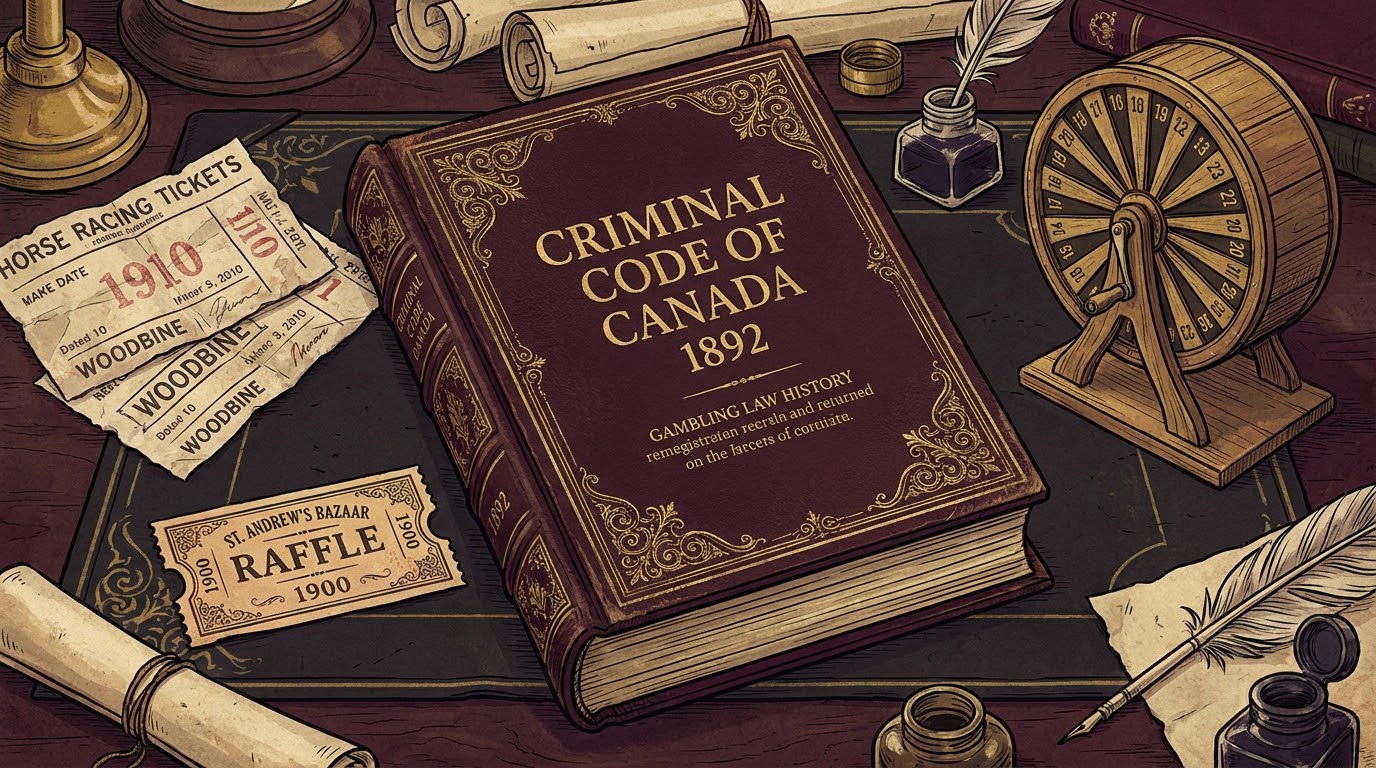
In 1892, Canada took a historic step by becoming the first country in the British Empire to codify its criminal law. The adopted Criminal Code of Canada, which came into force in 1893, established a strict rule: gambling in the country was completely banned, except for the few cases explicitly permitted by the Code itself. This principle of "everything is forbidden unless explicitly permitted" remained unshaken for over a century.
The First Loopholes: Charity Lotteries and Horse Racing Bets
However, society demanded leniency, and throughout the 20th century, Parliament introduced several key amendments to this rigid legislation. The first minor relaxation occurred in 1900, when the law permitted small lotteries and raffles (not exceeding 50 dollars) at religious and charitable bazaars to raise funds for public needs. In 1906, the term "lottery scheme" was officially introduced into the law, later interpreted broadly by the courts to cover various gambling formats.
In 1910, pari-mutuel betting at racetracks gained legal status and was placed under the strict supervision of the federal Department of Agriculture. Later, in 1925, agricultural fairs and exhibitions were officially allowed to organize midway games during annual events. Until the late 1960s, betting on horse races and these modest charity raffles remained the only legal forms of gambling in the country.
The 1969 Reform and the Montreal Olympics
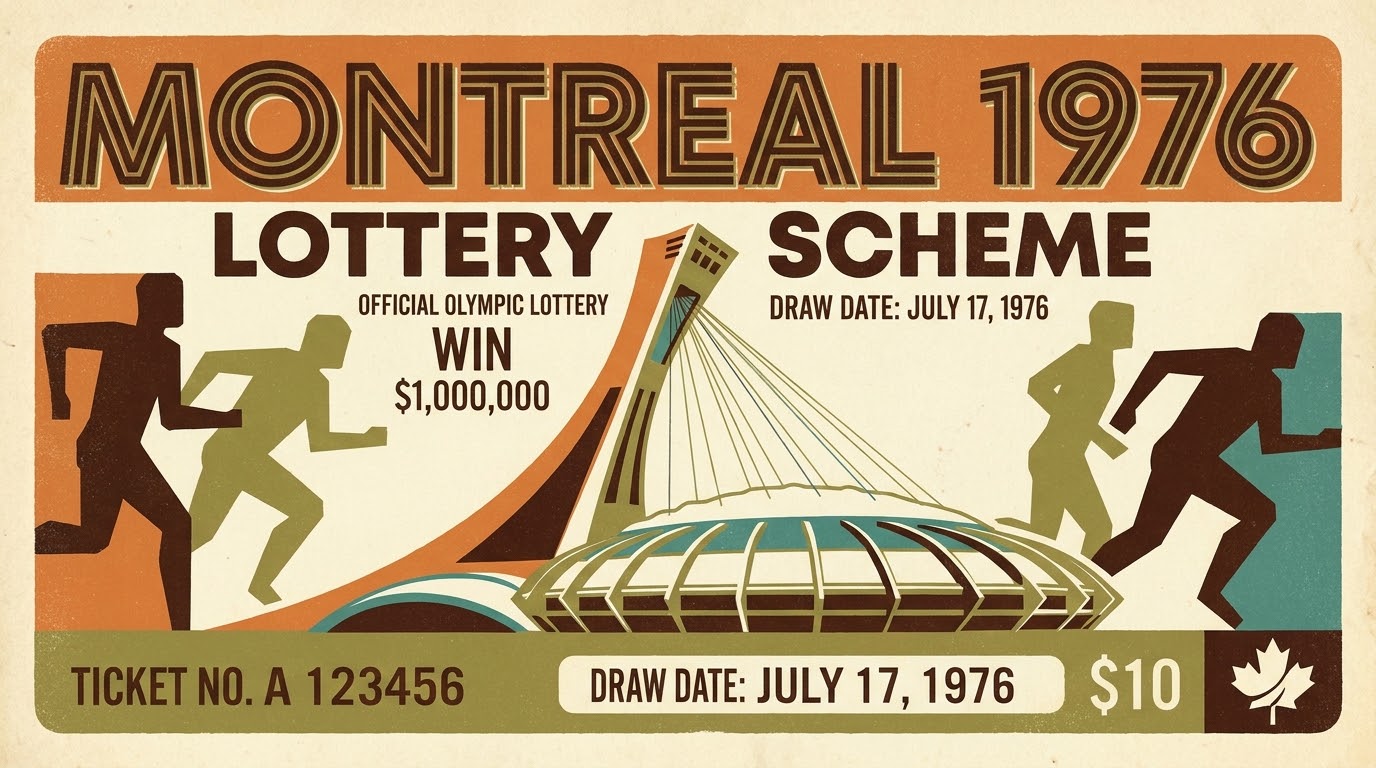
The turning point in the history of Canadian gambling came in 1969. Canada was drawn to the success of the first state lotteries in the US (particularly in New Jersey). However, the main catalyst for change was the financial situation of the province of Quebec and the city of Montreal, which faced massive debts following the Expo 67 World's Fair and were preparing to host the 1976 Summer Olympics. Intense lobbying from Quebec forced the federal government to make concessions.
In 1969, sweeping changes were made to the Criminal Code, allowing the federal and provincial governments to independently organize and conduct a wide range of lottery schemes. Provinces also gained the right to issue licenses to charitable and religious organizations to run smaller lotteries. This reform was promoted under the banner of "revenues for the public good": all funds raised went directly to the government or non-profit organizations for charitable purposes. This radically distinguished the Canadian approach from the American one, where casinos were traditionally run by private entrepreneurs under tax authority supervision.
Transfer of Control to the Provinces in 1985
The 1969 reform brought the provinces colossal annual revenues and led to the gradual displacement of the federal government from the gambling business. In 1979, federal authorities reached an agreement with the provinces, promising to abandon their own lotteries in exchange for fixed annual payments from the regions. However, in 1983, Parliament attempted to regain ground by legalizing sports pool betting exclusively for the federal level. The provinces considered this a breach of the 1979 treaty, and protracted lawsuits ensued.
The conflict was resolved in 1985. Under a settlement agreement, the provinces agreed to pay the federal government 100 million dollars, which went to fund the 1988 Winter Olympics in Calgary. In return, in December 1985, Parliament completely removed the articles on the federal government's right to conduct lotteries and sweepstakes from the Criminal Code, transferring exclusive control over this industry to the provinces. The 1985 amendment also legalized the use of computers, video devices, and slot machines for the first time. From that moment, provinces could independently manage digital gambling, but the law strictly forbade them from granting licenses for electronic machines to third-party private individuals — they could only be operated by the provincial governments themselves or their authorized crown corporations.
Marine Casinos for Tourists
In 1999, the Parliament of Canada passed Section 207.1 of the Criminal Code, which allowed commercial casinos to operate aboard international cruise ships while in Canadian territorial waters. This measure was aimed at supporting tourism on the St. Lawrence River and along the west coast. For gambling to be legal, the cruise must last at least 48 hours, include a port of call in a foreign country, and involve part of the route in international waters.