An Architectural Masterpiece on Notre Dame Island
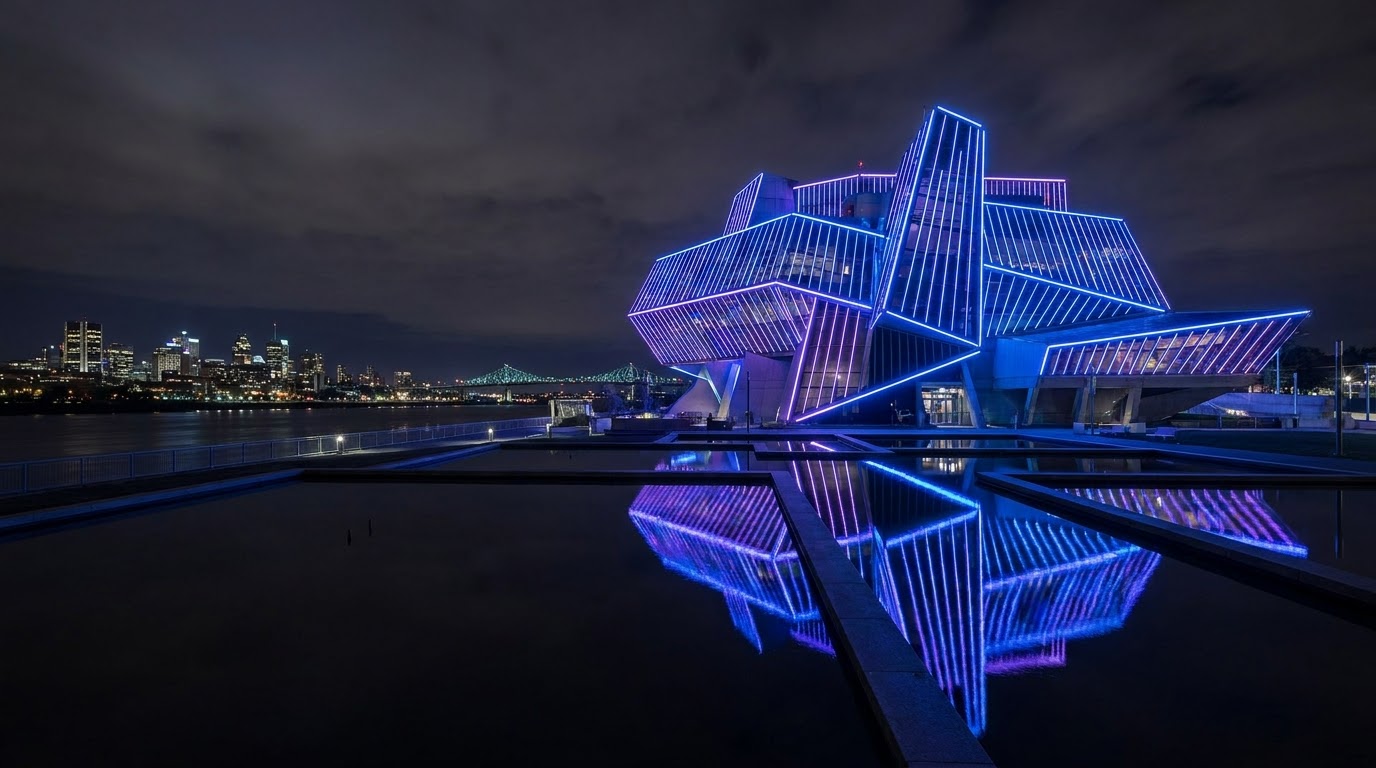
The Montreal Casino (Casino de Montréal), opened in October 1993, is the largest gaming establishment in Canada and ranks among the top ten largest casinos in the world by gaming floor space. Its construction cost 95 million Canadian dollars, and it is managed by the Société des casinos du Québec (SCQ), a corporation established by the Quebec provincial government under the auspices of the state-owned Loto-Québec. The casino is located on the artificial Notre Dame Island in the picturesque Jean-Drapeau Park.
The main distinguishing feature of the Montreal Casino is its unique deconstructivist architecture. The complex consists of three buildings: two are former exhibition pavilions of France and Quebec, built for the Expo 67 World's Fair, while the third building was added later. Unlike traditional casinos around the world, which try to isolate the player from the outside world, the building in Montreal has many panoramic windows overlooking the St. Lawrence River and low ceilings. Inside the five-story main building are over 3,200 slots, 120 gaming tables, 4 restaurants, 4 bars, and a famous cabaret.

The 1994 Keno Scandal: Chaos Theory vs. The Computer
Just six months after the casino opened, in April 1994, one of the most high-profile mathematical scandals in world gambling history erupted here. An ordinary Canadian player, Daniel Corriveau, won a staggering 600,000 Canadian dollars in electronic Keno. Corriveau managed to guess 19 out of 20 random numbers three times in a row, which according to the laws of mathematical probability is virtually impossible in a fair game. Corriveau himself told the press that he used his own computer to analyze the sequence of numbers based on the mathematical chaos theory.
Casino management suspected fraud, suspended the payout, and initiated a massive investigation. The results were astounding: Daniel Corriveau did not physically hack the machine. The problem lay in the vulnerability of the computer's pseudorandom number generator (PRNG). The machine lacked an independent internal timer, and each time the power was turned off and on (which happened daily when the casino system was rebooted), the PRNG started with the exact same initial "seed" value. This made the output combinations of numbers absolutely identical and completely predictable to a person who had recorded the previous games. Corriveau was fully exonerated and received his rightful winnings, while the casino urgently replaced the software with more advanced algorithms.

The Digital Era and Mobile Gambling
In the 21st century, Canadian gambling is undergoing a rapid transition into the online space. According to Canadian analysts, the number of internet players in the country grew from 2 million in 2001 to over 4 million by 2015, and today Canadians spend about 17 billion dollars annually on online gaming. Curiously, online casino spending per capita in Canada significantly exceeds similar figures in the US and the UK, averaging $824.68 per year.
Canada demonstrates a unique global demographic trend: while generally among gambling enthusiasts there are slightly more men (54% versus 46% for women), Canadian women have proven to be much more tech-savvy. According to statistics, 55% of all playing women place bets directly from their mobile phones and smartphones. Canada remains the only country in the world with such a pronounced gender trend towards mobile technologies. Legal online gambling today is strictly monopolized and regulated at the level of each province through their crown corporations (such as Loto-Québec or OLG in Ontario).
Healthy Lifestyle and Bans at Casino de Montréal
In accordance with Quebec's strict provincial health protection laws, a total smoking ban was introduced on the premises of Casino de Montréal in May 2006. Furthermore, the consumption of any alcoholic beverages is completely prohibited on the gaming floors — they can only be ordered in the complex's restaurants and bars.